
Palantir and Zeta Global announce strategic partnership.Read News
Palantir and Zeta Global announce strategic partnership.Read News
When it comes to return on investment, email leads the pack with an estimated ROI of 36:1. While there’s no better place to spend your marketing budget, scaling email marketing can be challenging. Creating and sending email campaigns manually might work with a list of a few hundred, but larger lists require more time, data, and investment.
Which is why many brands have turned to automated email campaigns. These campaigns are often triggered by user behavior. For example, when a user signs up for an account, an email tool automatically sends a welcome email.
Automated email marketing campaigns aren’t just more convenient—they’re more effective. According to a recent study, automated emails drive 320% more revenue than non-automated emails.
Need a bit of inspiration for your next automated campaign? Let’s look at seven of the best automated campaigns to see what email marketing strategies are most effective.
Welcome emails are an automatic email campaign triggered when a user makes their first purchase, signs up for a new account, or joins your email list. This series helps the receiver get to know you and sets the tone for the relationship.
Headspace, a meditation app, sends this email when users download their app and create an account.
The email encourages users to establish a regular mediation practice and introduces several key features of the app, including what the user has access to and how to upgrade from the free account. This soft upsell lets users know it’s available but doesn’t push hard for conversion.
Why it works:
Not all emails need to push a hard sell. By educating subscribers, you establish your brand as a trusted resource and a valuable addition to their inbox.
Educational email campaigns can be as simple as sending users a few key resources or as complicated as a week-long course sent out in multiple emails. This email marketing automation campaign from Robin provides businesses with the information they need to consider when returning to the office.
While this email does mention signing up for a consultation, the core message focuses on providing relevant resources and information users likely need.
Why it works:
Your email list can be an incredible asset—if users are engaged. Creating an automated email campaign targeting users who haven’t opened an email recently keeps your business top of mind and re-engages inactive subscribers.
This email from Timeshifter, an app that helps users adjust to jet lag, works to engage users after the pandemic. They knew many users stopped traveling and wanted to bring those users back and reintroduce their brand.
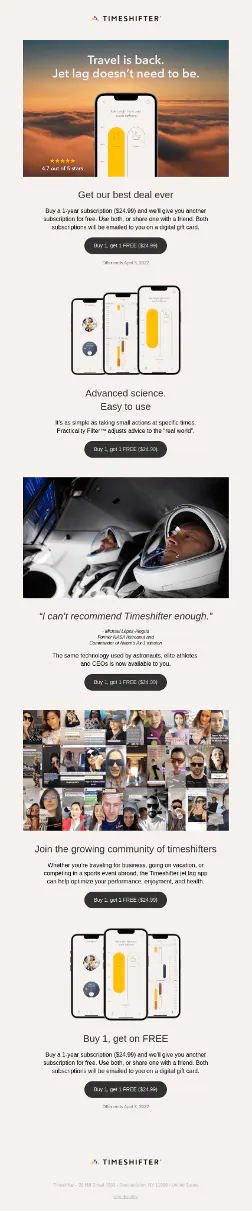
The email offers a discount to encourage conversions and includes social proof to build trust in their offering.
Why it works:
Onboarding campaigns introduce users to a product or service after purchase and explain how to navigate signing up, using new features, or learning new skills. This type of email is essential to reduce churn for SaaS and other service companies.
This automated email campaign from Sketch is sent after users sign up for a free trial. It outlines features, how to use the platform, and how to reach out to customer support.
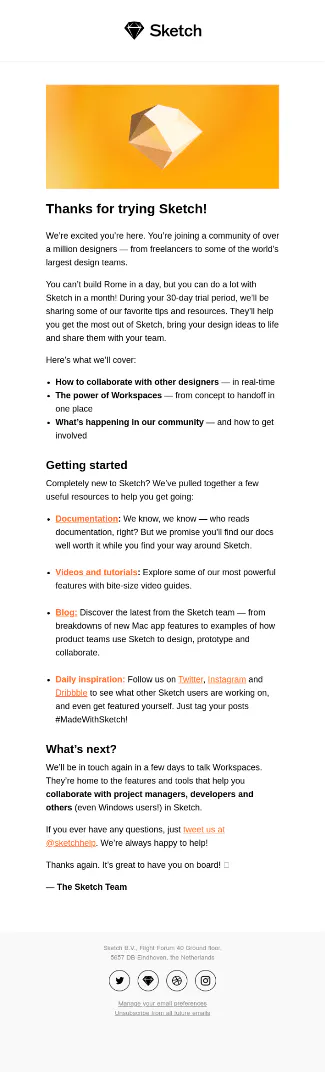
This email is the first in a chain of automated emails Sketch sends to help users navigate the platform. When done right, onboarding emails engage users, reduce churn, and nurture free trial users towards conversion.
Why it works:
Cart recovery emails are one of the most popular automated email marketing campaigns—but what about users who don’t find what they’re looking for? eCommerce companies can keep users in the funnel with automated campaigns even if users don’t add items to their cart.
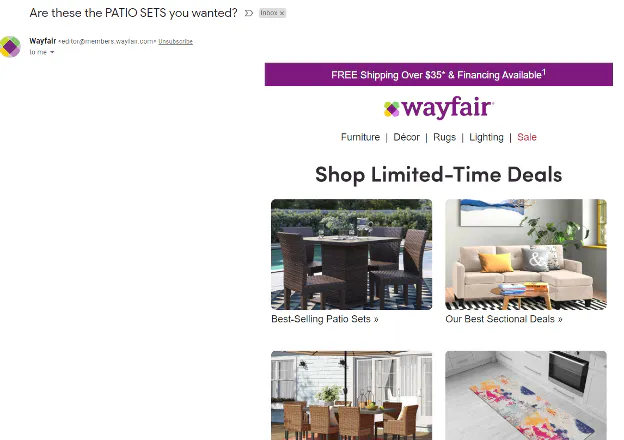
Wayfair sent this email to a user who searched for patio furniture but didn’t convert. Since users sign in, Wayfair can see exactly what they searched for and create a curated list of suggested products.
Why it works:
Automated dunning emails notify users their payment hasn’t processed, often because their credit card expired. These emails are crucial for reducing involuntary churn. They can also be automated so you don’t have to lift a finger.
Here’s an automated dunning email from Chewy, letting a customer know why their autoship hasn’t been delivered:
The email clearly explains the issue and provides a link for users to fix the issue.
Why it works:
Most email marketing automation campaigns focus on conversions. But what happens after the conversion is just as important—if not more so. Following up after a purchase can increase reviews, solve small challenges before they become churn-worthy, and drive the next conversion.
Thriftbooks, an online bookseller, sent this email to a user after a purchase. It mentions the book they bought and includes a link to leave a review. (Asking for a review in the copy might be more effective, but it’s possible they tested and found this was more effective.)
The email also recommends related books in the same category:
Why it works:
Scaling your email strategy is easier with email automation. By creating triggers and segments, businesses can send the right messages at just the right time. Personalisation can make automated email campaigns even more effective.
Zeta Global’s email personalisation service connects data across channels so brands can deliver automated emails based on user interests, demographics, and real-time behaviors.
The Zeta Marketing Platform empowers businesses to offer highly tailored experiences driven by AI.