
2026 Holiday Marketing Insights
Discover the latest holiday marketing strategies, trends, and insights to elevate your seasonal campaigns, all in one convenient hub.

Zeta Global Teams Up with Fireworks to Unveil New Specialized Athena Inference Models Using NVIDIA NemotronRead News
For years, holiday retail has been defined by discounts, promotions, and the race to Black Friday.
This year, the bigger story is shopper behavior.
Our survey of 7,600 U.S. consumers found people are still spending, but they’re making decisions differently. They’re taking more time, using more tools, and evaluating more factors before they buy.
More than half of consumers plan to spend over $500 on gifts this year, including one in three who expect to spend $1,000 or more.
After several years of volatility across spending tiers, 2026 is evenly distributed. Some shoppers are still ready to spend big, while others are planning more moderate budgets. The only tier to shrink was those planning to spend less than $100.
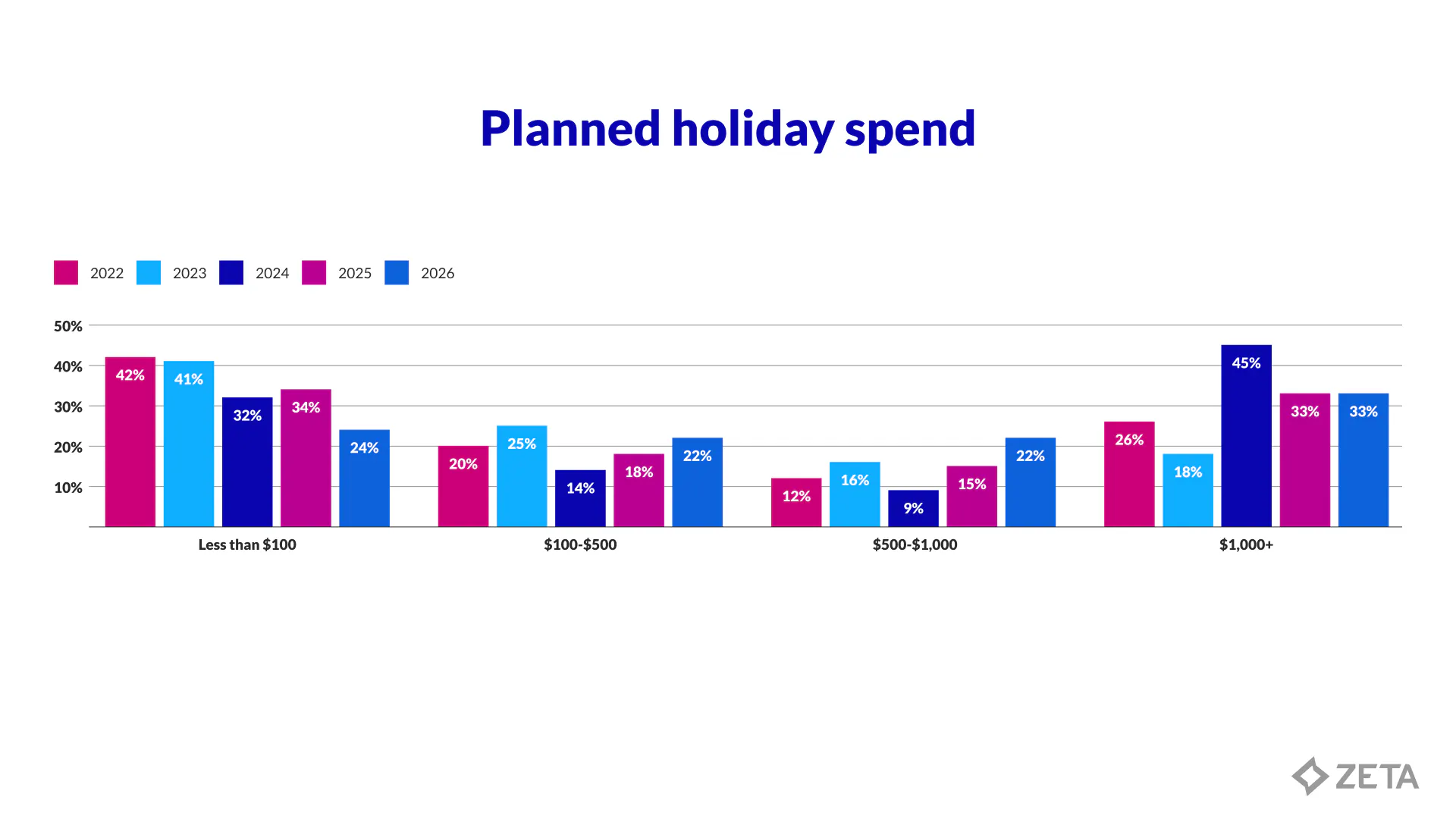
Want the full five-year spending breakdown, plus how consumers are splitting budgets across traditional, practical, and experiential gifts? See the full findings.
In 2025, better prices and discounts were the clear frontrunners when shoppers explained what influenced their choice in retailers. In 2026, that advantage has largely disappeared. This year’s results are remarkably balanced across selection, pricing, discounts, reviews, shipping, returns, and service.
Consumers are weighing a much broader set of factors than they did a year ago. Price may still get shoppers in the door but isn’t enough to earn the sale anymore. Shoppers are assessing the full retail experience.
That shift also shows up in where consumers shop. Purchases are spread fairly evenly across department stores, discount retailers, specialty shops, online marketplaces, and brand websites, with no single format pulling ahead.
The omnichannel shopper has also become the largest group in the market. Nearly four in ten consumers say they regularly move between digital and physical experiences, researching a product online and buying it in-store, or the reverse.
For retailers, that means loyalty is no longer tied to a single destination. It’s tied to how easily a shopper can move between channels without friction.
The traditional holiday shopping timeline continues to stretch. Black Friday and Cyber Monday remain important, but they’re no longer the clear starting point for holiday shopping.
Shoppers are spread relatively evenly across the season, with meaningful groups beginning in early fall, in November, in December, and even over the summer. Fewer shoppers plan to wait until the last minute for their holiday shopping this year.
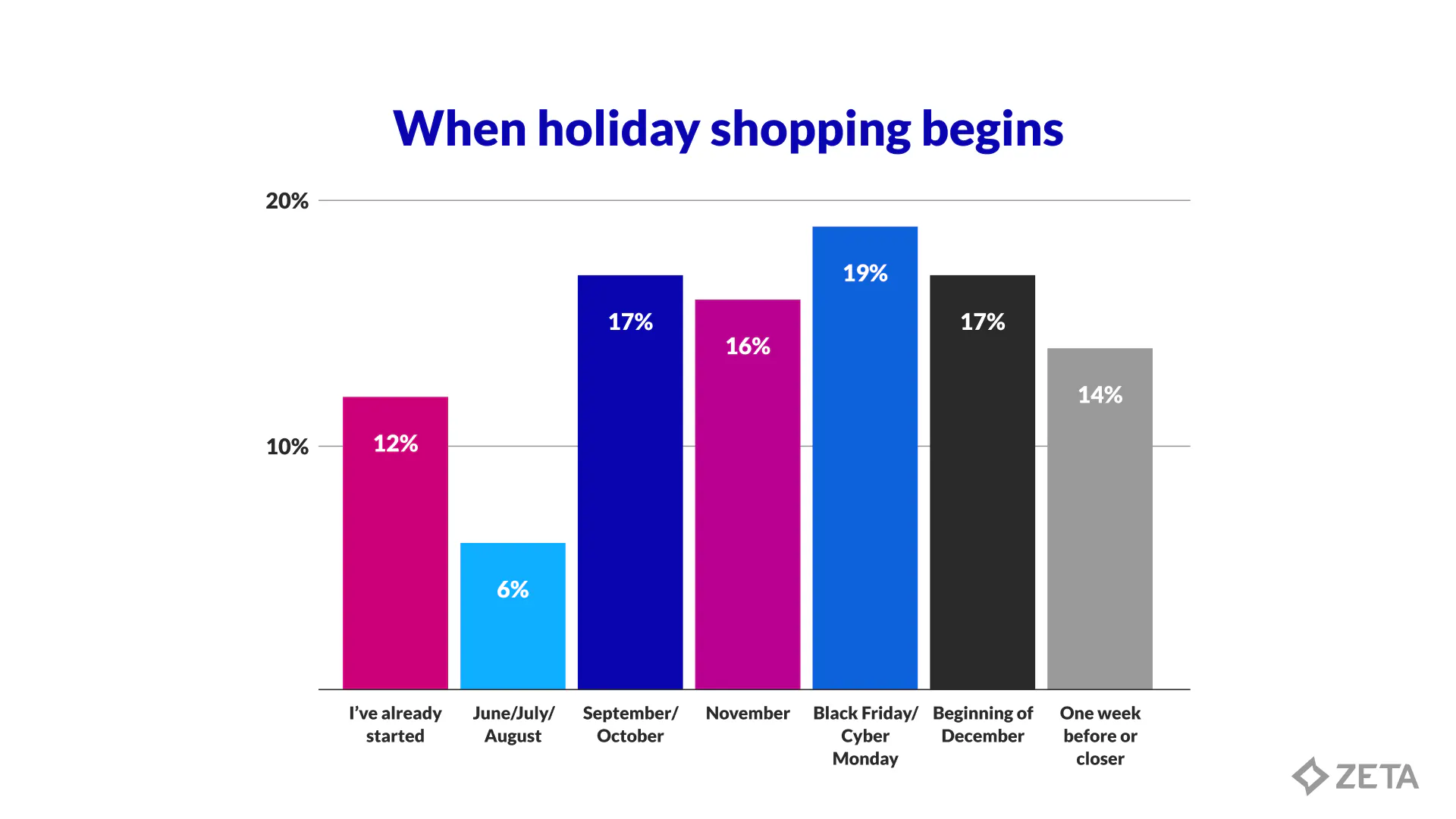
Interest in Cyber Week itself also rebounded this year. Half of shoppers still say Black Friday and Cyber Monday are compelling, up sharply from just 34% last year. For some, these remain key purchasing moments. For others, holiday shopping has become a longer, more continuous process rather than a single promotional event.
Retailers need to plan for a season, not just one promotional weekend.
AI has officially gone mainstream for holiday shopping.
More than 8 in 10 consumers plan to use AI this season, whether they’re looking for gift ideas, discovering products, comparing options, or summarizing reviews.
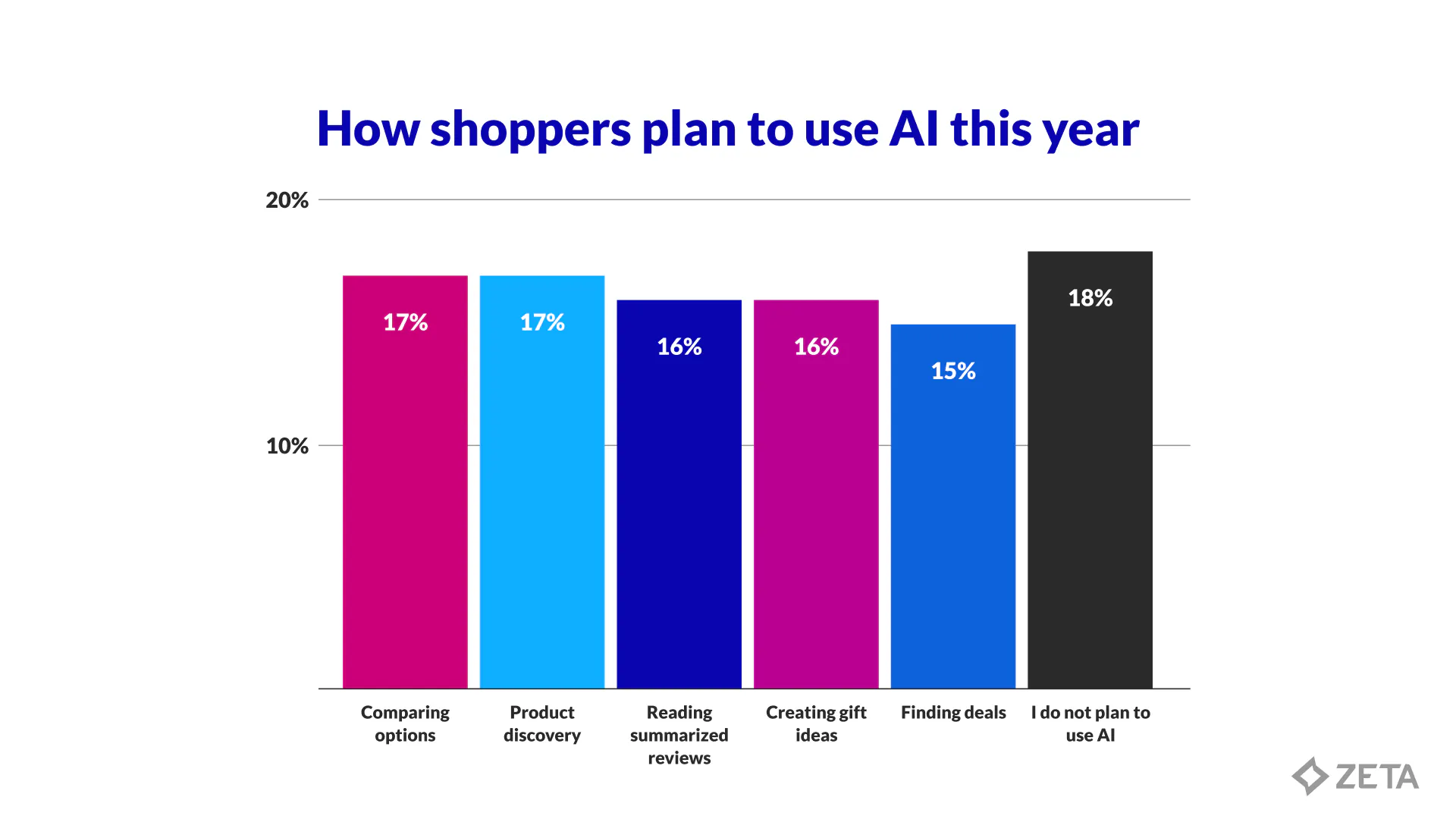
The interesting part isn’t that shoppers are using AI. It’s how they’re using it. They’re turning to AI to narrow choices, validate decisions, and shop with more confidence—not simply to find the lowest price.
Only 49% of consumers say they feel confident after making a holiday purchase. 51% say they often second-guess their decisions or frequently regret and return items.
This may be the survey’s most important finding. Consumers are researching more, comparing more, using AI, and evaluating more retailers than ever before, and many still aren’t confident in the decisions they make.
The reasons purchases stall out tell a similar story. Shoppers cite a mix of factors for abandoning a cart, from better prices found elsewhere to shipping costs, out-of-stock items, negative reviews, and simply having too many options to decide.
The same pattern appears for what frustrates shoppers most during the season: shipping delays, unclear promotions, out-of-stock products, irrelevant recommendations, and feeling rushed or pressured all land within a few points of each other.
No single issue is driving holiday frustration, so no single solution will solve it.
Holiday 2026 won’t be won by the retailer with the deepest discounts or the biggest promotions. It will be won by the retailer that makes decisions easier.
Consumers remain willing to spend. They simply expect more confidence, more relevance, and more value before making a purchase.
See the full report for more survey results + expert advice for retailers.

Discover the latest holiday marketing strategies, trends, and insights to elevate your seasonal campaigns, all in one convenient hub.
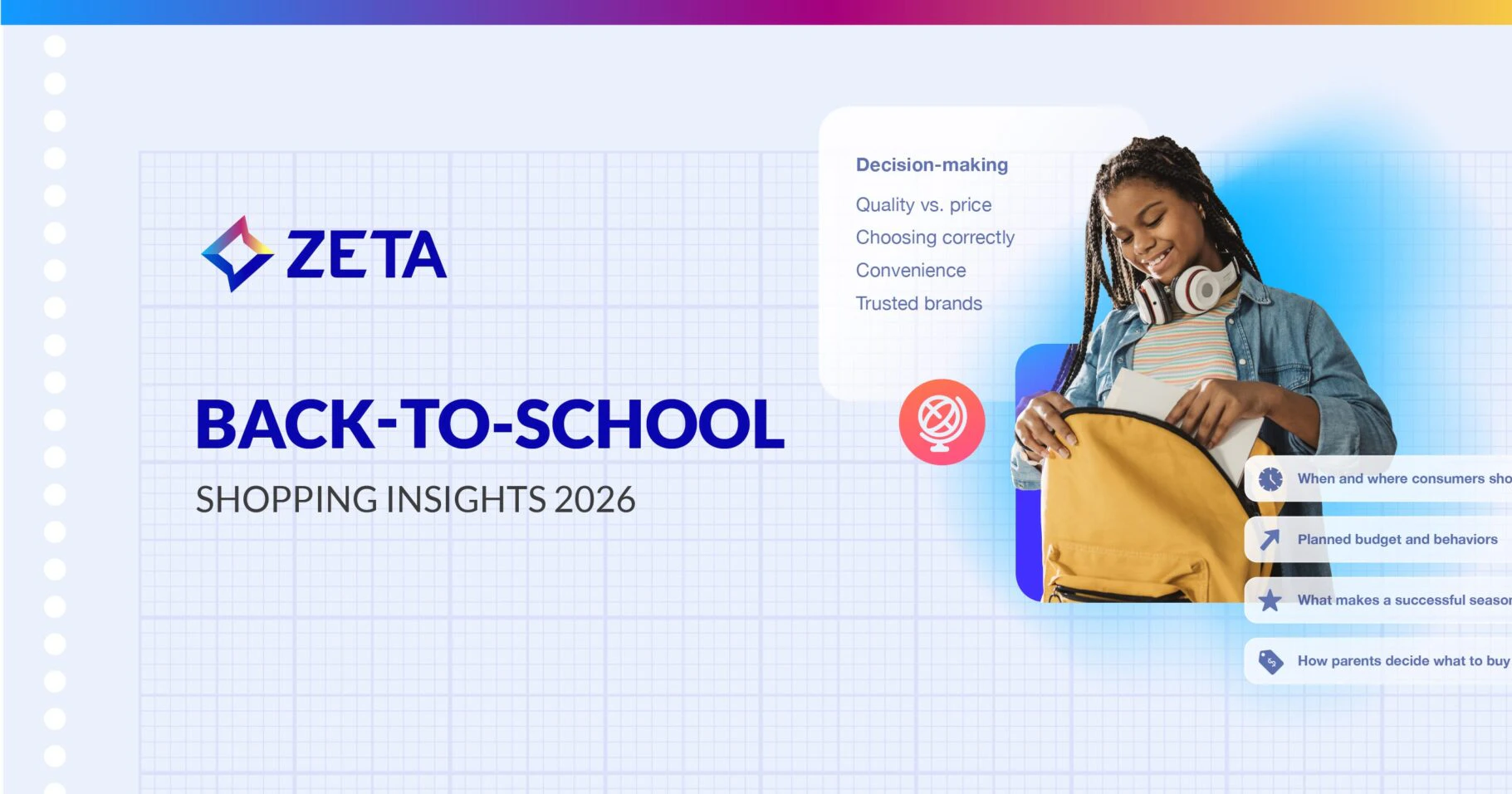
New survey data reveals how back-to-school shoppers are prioritizing value, convenience, and confidence over discounts in 2026.

Discover ten Athena by Zeta AI insights and prompts to help retail marketers optimize decisions, drive revenue, and protect margin.
Zeta is the AI-powered marketing cloud empowering enterprises to acquire, grow, and retain customers. It is the largest omnichannel marketing platform with identity data at its core.