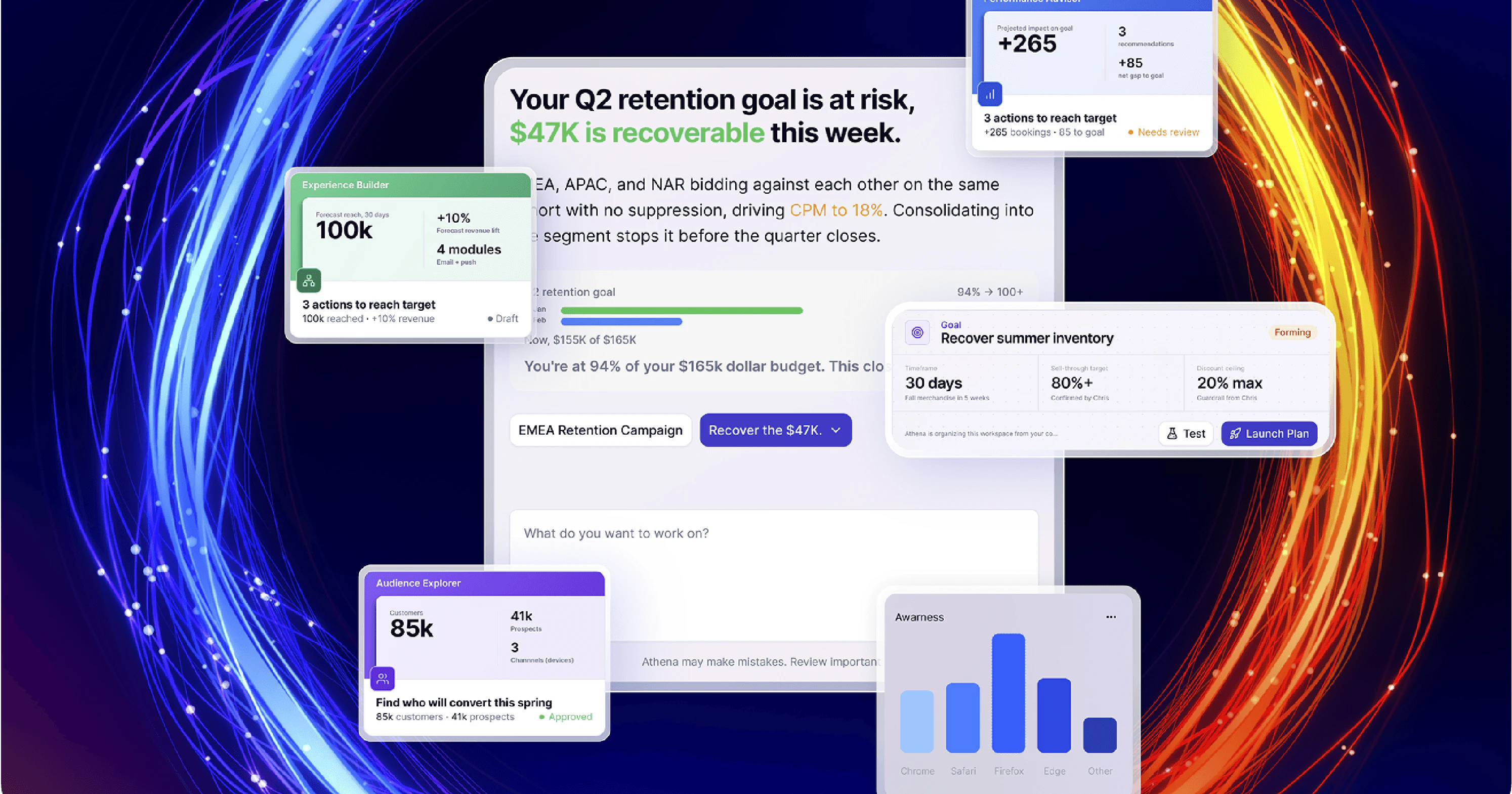
Zeta Unveils AthenaOS: The Operating System for Enterprise Intelligence
Zeta unveils AthenaOS: Explore planned capabilities, from dynamic workspaces to AI assistant integrations and smarter media decisions.

Zeta Global Teams Up with Fireworks to Unveil New Specialized Athena Inference Models Using NVIDIA NemotronRead News
Consumers aren’t just experimenting with AI shopping tools anymore. They’re starting to rely on them as part of their shopping routine.
A shopper asks an AI assistant for the best noise-canceling headphones under $300 during their morning commute, compares the recommendations over lunch, and purchases directly from the brand’s website that night.
New research from Zeta Global shows nearly 9 out of 10 consumers who have used AI for shopping say it has already improved their experience and expect to use it even more over the next year.
That momentum creates new opportunities for marketers—and raises expectations for the shopping experience. As consumers increasingly use AI to guide purchases, they also want accuracy, transparency, and control.
AI is helping shoppers cut down research time, discover products faster, and feel more confident about purchases. But consumers are also actively fact-checking recommendations and questioning the accuracy of AI-generated advice.
For brands, that creates an opportunity to make AI-assisted shopping feel more trustworthy from the start. Clear product information, consistent pricing, transparent reviews, and accurate recommendations all help reduce the need for consumers to second-guess what they see.

One of the most interesting findings in the survey is that Millennials and Gen Z are the most active AI shoppers and the toughest audience to win over.
They’re more willing to let AI influence purchases, automate routine shopping tasks, and guide spending decisions. But they’re also more likely to verify what AI tells them before completing a purchase. Millennials (ages 25-34) are the most ad-skeptical at 63%, and consumers age 65+ are the most receptive to ads in chatbots at 41%.

The consumers leading the shift toward AI-assisted shopping don’t want brands to simply “have AI.” They want AI experiences that are relevant, transparent, and grounded in real customer understanding.
This is where identity and data strategy become critical. Brands need to understand not only who consumers are, but also what motivates them in the moment.
AI is expanding the consideration set. Products and brands that may never have surfaced through traditional search or social channels are now entering the conversation through AI-assisted recommendations.
As consumers explore more options through AI, direct brand relationships become even more valuable. Rewards programs, personalized offers, and trusted brand experiences continue to shape purchasing decisions alongside AI-driven discovery. Many shoppers also prefer AI experiences built by brands themselves instead of relying entirely on general-purpose AI platforms.
That creates a significant opportunity for marketers.
Brands that invest in owned customer experiences, first-party data strategies, and loyalty-driven engagement will be better positioned as AI becomes a larger part of the shopping journey.
AI is changing how consumers shop, but it’s not changing what consumers value.
People still want confidence in their purchase decisions. They still want personalization that feels useful instead of invasive. And they still want trusted relationships with the brands they buy from.
As AI continues to become a larger part of the customer journey, marketers will be pushed to think beyond automation and focus more on relevance, trust, and long-term customer relationships, creating experiences that still feel distinctly human, because even as how people shop changes, the values they care about most rarely do.
Zeta unveils AthenaOS: Explore planned capabilities, from dynamic workspaces to AI assistant integrations and smarter media decisions.

Meet AthenaOS, our enterprise intelligence operating system, built around your goals to connect intelligence, action, and learning for growth.

Download the excerpt to learn why IDC MarketScape named Zeta a Leader in Worldwide Agentic Marketing for B2C Enterprises.